
Petro-Bioplastic Waste Management for PET and Starch
Ubiquitous post-consumer plastic waste is often physically mixed combining recalcitrant petroleum-based plastics together with bioplastics forming (petro-bio) plastic streams. Bioplastics and fossil fuel-based plastics are typically disposed of jointly or are indeed manufactured in intricate layers to achieve product such as packaging for shelf-life extension. This inherent mixing of these streams means even existing advanced sorting techniques are unable to economically separate these (petro- bio) plastic streams resulting in the dramatic deterioration of the original properties of the component plastics in particular petroleum-based plastic waste recycling streams where mechanical recycling becomes futile. New end-of-life strategies for mixed (petro-bio) plastic waste is highly pertinent in achieving environmental protection, sustainability for plastic value chain industries including recyclers and government policy makers worldwide. The presence of bioplastic mixed in with polyethylene terephthalate (PET) or other petroleum-based plastic.
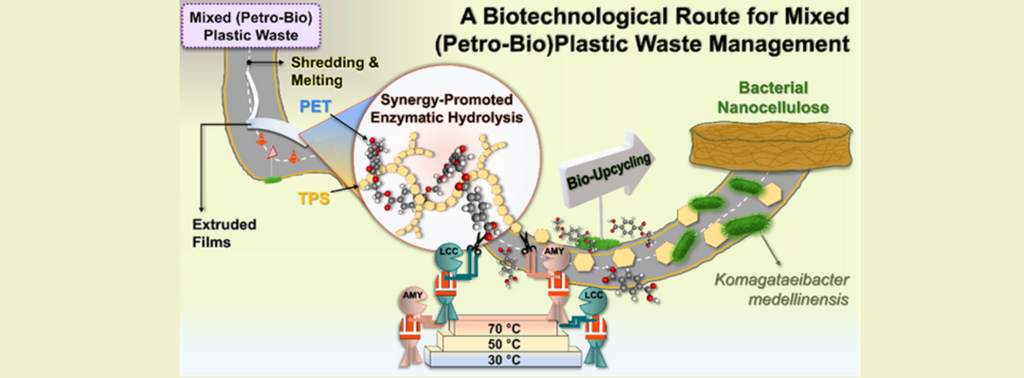
At TUS, advanced routes for the sustainable management of mixed (petro-bio) plastic waste are being piloted. One example uses PET – to represent petrochemical polyester plastic–which is mixed with the common bioplastic, thermoplastic starch (TPS). Biotechnological treatment via synergy-promoted enzymatic degradation delivers effective depolymerization of both the petro (PET) and bio (TPS) plastic components. In a further step, subsequent bio-upcycling of this mixed waste stream into the high value bacterial nanocellulose (BNC) is performed. This paves the way for the sustainable management of challenging mixed recalcitrant and bioplastic plastic waste opening up a series of circular lifecycle avenues for commonplace mixed petrobio plastics.
Contact Us
Athlone Campus,
Bunnavally,
Athlone,
Co. Westmeath,
N37 HD68
Email: Margaret.BrennanFournet@tus.ie