
Plastic Polyolefin Depolymerisation
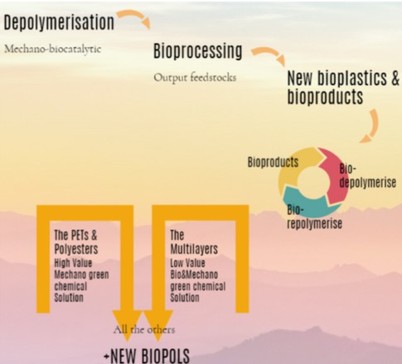
As a vital component of a circular economy, repurposing post-consumer sorted plastics through depolymerization is a promising technique for recycling polymers. Depolymerization converts plastic into oligomers or monomers, which can then be purified and repolymerized to create a polymer that can be utilised in the same high-value application that produces the waste or one with a higher value.
High selectivity conversion of most polyolefins and polyesters to their monomers is not possible due to the absence of precise reaction control in current methods. The intricate physicochemical reactions that occur between the reactants and intermediate products (such as melting, vaporisation, decomposition, etc.), as well as the reactions that occur during continuous heating of the plastic and disrupt the depolymerization pathway, result in a variety of products other than the monomer (such as gases, condensable hydrocarbons, aromatics, etc.). Focusing on energy sustainability, our team at TUS is delivering new approaches and strategies to better understand and enhance the mechanisms of green chemical transformation and sustainable catalytic reactions for polymer deconstruction and reconstruction.
Contact Us
Athlone Campus,
Bunnavally,
Athlone,
Co. Westmeath,
N37 HD68
Email: Margaret.BrennanFournet@tus.ie